18. Ad Nauseam

THE SIEGE OF STALINGRAD
A Play in One Act
Time: Forever
Location: Everywhere
A windowless, airless room. Four musicians. The fug of stale smoke and damp.
Guitarist is crouched over a new pedal. Cables everywhere. He holds two of them up.
GUITARIST: (to himself) If this is the input, then this should be the... no. If this is the...
He tries another combination.
GUITARIST: (muttering) Why. Fucking. Jesus.
He adjusts the pedal. Plays a chord. A burst of feedback. He adjusts again. Still cursing under his breath. The others wait.
Singer lights a cigarette.
SINGER: Will we start?
GUITARIST: Yeah. Just a second. I just need to — if I can just — yeah, just a —
He adjusts the pedal again. Another burst of feedback. Still muttering. Still cursing.
BASSIST: What does it do?
GUITARIST: Stereo chorus. With a bit of reverb.
Bassist lights a cigarette.
BASSIST: (mimicking) Stereo chorus. With a bit of reverb.
Singer laughs. Drummer plays a ta-dum tish.
Guitarist stands. Plays a chord. The pedal emits a long, sustained wail. Followed by another burst of feedback. He adjusts. Another wail. Another burst.
Drummer lights a cigarette. Through the wall, the bass thrum of the band next door. The singer recognises it.
SINGER: I recognise that. Is that—
He trails off. Muttering insults. Agitated.
DRUMMER: (counts in) One, two, three, four.
They start. Massive feedback squeal. The sound is unbearably loud, painful and distorted. Like a tumble dryer full of kitchen utensils. They stop abruptly.
SINGER: For fuck’s sake. I can’t hear myself. Can you turn down?
GUITARIST: I can’t. The amp won’t break up properly. I can’t get the proper tone.
Guitarist lights a cigarette. The room is getting warmer. No air. Stale. Smoke drifting up toward the fluorescent light.
SINGER: What chord are you playing?
GUITARIST: G. Well, E minor. They’re relative —
Drummer absentmindedly taps the snare. Once. Then again.
GUITARIST: It’s the same notes, just a different root—
Drummer adds the hi-hat. A quiet pattern emerging. The smoke is thickening. The PA hums. A guitar string vibrates sympathetically.
GUITARIST: If you just think of it as the same key—
Drummer adds the kick drum. Full tilt now. Completely lost in it. The heat is rising. Smoke filling the upper half of the room. A microphone begins to feed back, a thin rising whine underneath everything else.
GUITARIST: The chord is technically—
Full kit. Drummer completely gone. Own world. Eyes closed. The smoke is dense now. The PA humming, the mic feeding back, the fluorescent light flickering, faster now.
GUITARIST: (finally snapping) WILL YOU SHUT THE FUCK UP. I CAN’T HEAR MYSELF THINK.
Drummer stops abruptly. Cymbal rings out slowly into silence.
Silence. Four cigarettes burning. Nobody moving. The smoke hangs motionless. The PA hum and the feedback whine continue, the only sounds in the room.
GUITARIST: What was I saying? Right. So. What I’m saying is, if I play a sort of G, and you’re playing a sort of E minor, and the bass is on a sort of D moving up, it’s all the same thing really, it’s just—
DRUMMER: (cutting across, brightly, to everyone) Did anyone see The Siege of Stalingrad on BBC last night?
Long silence.
SINGER: From the top.
They start. Ear-blisteringly loud. Horrible. Torture. They stop abruptly. Amps buzzing. It could be anywhere now. It could be nowhere. For a moment, the fluorescent light goes out completely. Total darkness. Then it flickers back on.
Silence.
SINGER: Pub?
They all mutter ‘yeah’ under their breath and switch their amps off.
They move toward the door. Bassist turns to drummer.
BASSIST: Tell us about that Stalingrad. Was it funny?
They go.
Somewhere, a song is not being written.
Repeat ad nauseam.
***
A month before starring in our own little Beckett production, we’d left the squat in Camberwell for the last time. Loaded the gear into the van, pulled the door shut, that was it.
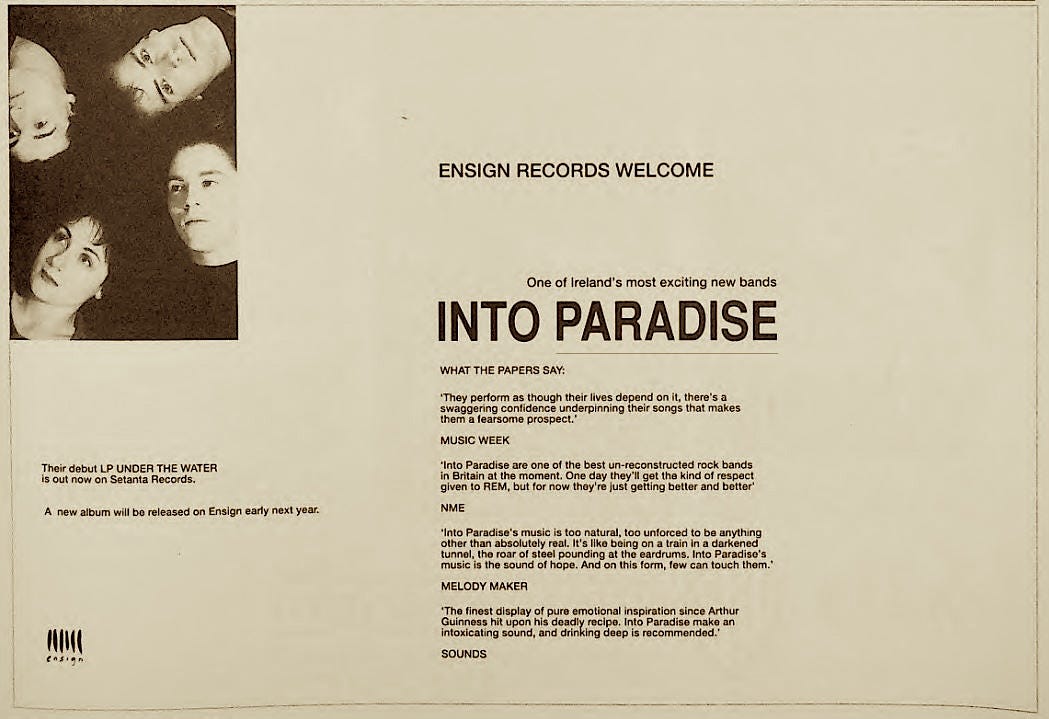
Someone should put a plaque up. Rumbold House. Into Paradise Lived Here. The minute we left, Keith moved another band in. God love them, I thought.
We arrived back to a country that had lost the plot entirely. Nobody was going to work. It was Italia 90, and everywhere you went, every pub, every street corner, every passing car, all you heard was
Olé, Olé, Olé.
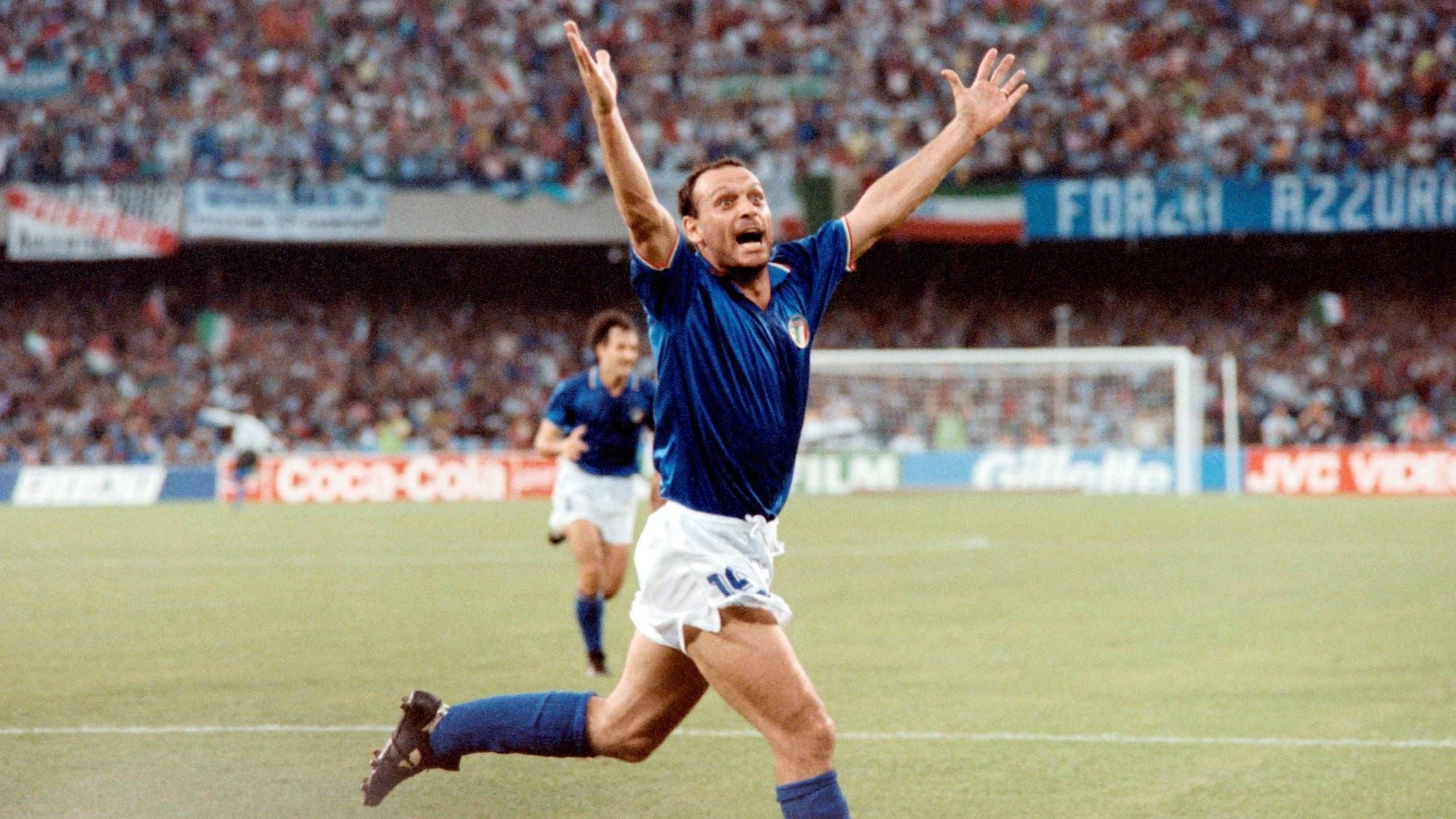
We all went down to the Glenside to watch Ireland against Italy. Football was never my thing, but Italia 90 wasn’t really about football. It was about something else entirely. The quarter-final. The closest we ever got. Schillaci. A name no Irish person will ever forget.
One long desperate Noooooo rising from every corner of the room as he scored the only goal.
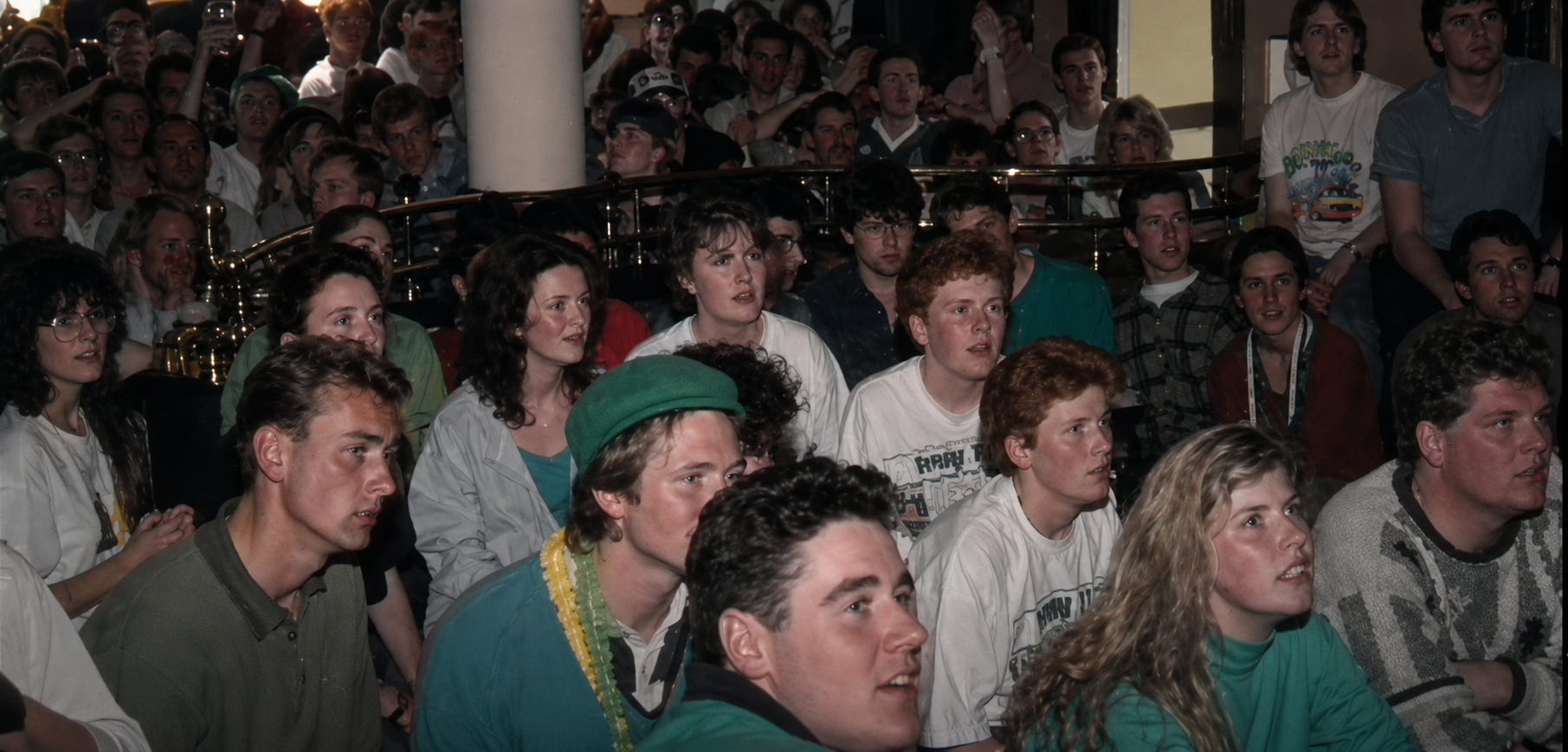
Except one corner.
Yesssss.
It was Dec. Only Dec. Blessed with an unerring instinct for Spike Milligan absurdity. People were asking him if he was Italian. ‘No, I’m Irish’. They walked away bewildered.
Although it was great to be back home, there was one major element missing. We couldn’t get back into our old rehearsal room in Churchtown. That room meant something. It was where we’d written the first album, where we’d found whatever it was we had. The Blue Angels had moved in permanently now, and that was that. You don’t realise what a room gives you until it’s gone. So we had to book this place in town called Litton Lane.
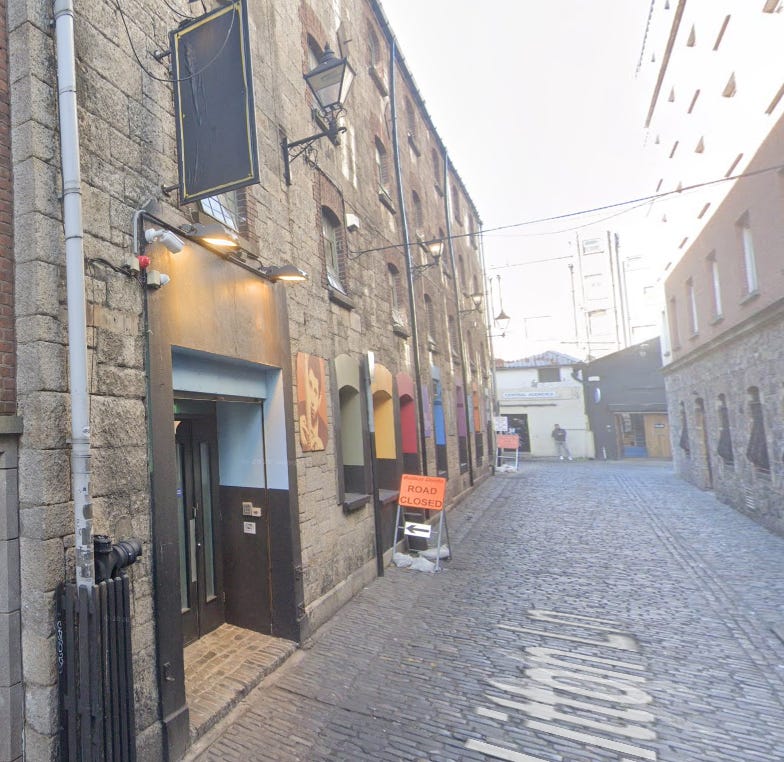
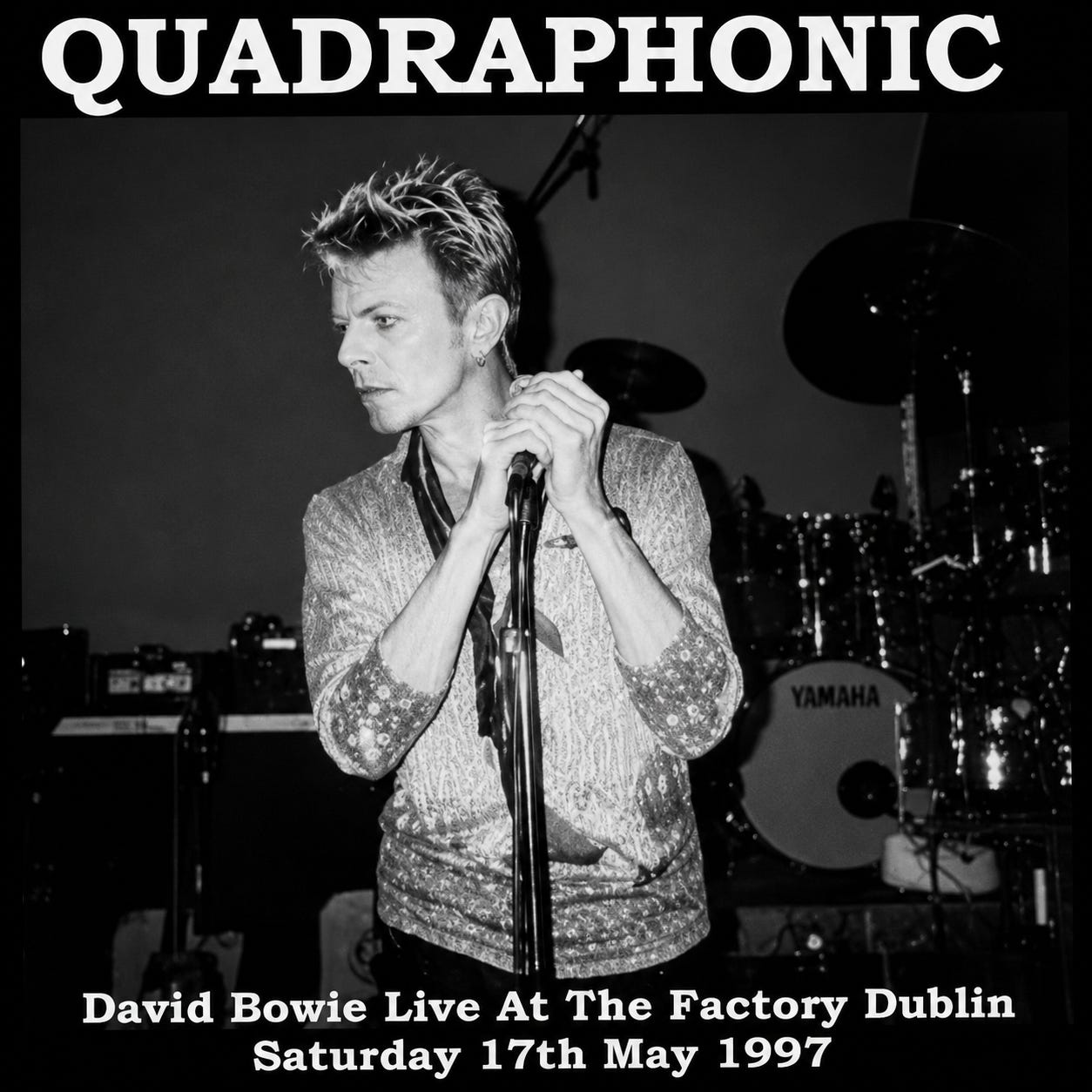
We booked Litton Lane for a month. It had once been called the Ritz of rehearsal rooms, back in the early eighties. It had seen better days by 1990. The title of best rehearsal room in Ireland had gone to the new place called The Factory, down the docks, where the beautiful and the famous went. We were neither beautiful nor famous. So Litton Lane it was.
An album back then meant twelve songs, more or less. We had four songs of decent enough calibre: ‘Gently Falls’, ‘Yesterday’s Men’, ‘Burns My Skin’ and ‘Rain Comes Down’. That left eight more to write.
We resurrected ‘Dreaming’, a song from the abandoned Sun Studios sessions back in ‘89, dug out and dusted off. Beyond that, we started digging through more old demos and half-finished ideas. ‘Bring Me Up’ was bastardised together out of two of them, songs that had never gone anywhere on their own. I had a few guitar arrangements I’d been knocking around myself, nothing with names yet, and not much in them if I’m honest.
Rachel was the one who kept up with new music. Always had been. While the three of us were largely content with what we already knew, she was paying attention to what was happening, coming in with names and records and enthusiasms. So it was no surprise that she had Goo, the new Sonic Youth album. One afternoon in Litton Lane she put it on through the PA and said we should all have a listen, that there might be something in it for us. Nobody engaged. We half-heard it and retreated into whatever we were doing.
It could have helped break the impasse. Not turned us into Sonic Youth. We'd have made our own parroted version of it, something imbued with our own sound. It would have loosened the writing, given us a new vocabulary. This was typical of me in particular. If something didn't grab me immediately I tended to dismiss it, move on. Childish, really.
The records that unsettle you on first listen, that you can't quite get a hold of, are often the ones that end up meaning the most. The irony is, about a year later I couldn't stop listening to this album.
Rachel heard something and wanted to share it. We didn’t bite. Writing these pages, I keep landing on moments like this one. I think I’m writing about the music. I end up writing about myself. Not all of my previous selves are people I particularly want to spend time with.
Anyway, onwards.
The slump continued. We were saved, temporarily at least, by Dave coming in one day with ‘Angel’. Fully formed, chords, lyrics, everything. He played it through and it was done. Complete. I never quite found my place in it. But I was glad it arrived. We needed something.
It did not feel like the makings of a strong album. The difficult second album is not a myth. The first one had years behind it. The second one had whatever we could find in a rehearsal room in Dublin in the summer of 1990. That was the reality of it.
After about three weeks of going in I told the others straight that a lot of what we had was shit, that we were rushing it, and that I didn’t see why we needed to do this now. It went down badly. Nobody wanted to hear it. The atmosphere curdled.
I’d ignored Rachel’s instinct about Sonic Youth and said nothing, and here I was three weeks later trusting my own doubts faster than I’d trusted someone else’s enthusiasm. And who the fuck was I to say that? They were all in the same room, all working with their own frustrations and insecurities. I just happened to be the one who said it out loud.
We went back in the next day. And the day after that. And the day after that. That was the only answer any of us had.
Litton Lane had one thing going for it beyond the PA and the decent live room: there was a phone in the rehearsal room with a speaker. That was where Keith rang. He had good news, he said, and a little bit of bad news.
The good news: the studio for Album Two was booked. The Church, one of the most prestigious studios in London, three weeks in August. Adrian was back in as producer, and the engineer would be Al Clay, fresh from working with Gil Norton on the Pixies. No squat this time either, they’d booked us into a hotel for the duration. That felt good.
More good news. The Waterboys had pulled out of a session at Windmill Lane, and Ensign had got us the day if we wanted it.
The little bit of bad news was the publishing deal. When we signed to Ensign we also signed our publishing to Dizzy Heights, part of the same Chrysalis setup. One meeting, one massive mistake.
A record deal and a publishing deal are two entirely separate things. The record deal covers your recordings. The publishing deal covers your songs, the compositions, the royalties, everything that flows from them. You keep them apart. Different companies, different interests, ideally competing with each other for your songs. That's what lawyers are for. We had one. We just never bothered to visit him.
A little bit of bad news. That was how Keith put it. What it actually was: a catastrophe. We had lost tens of thousands, potentially hundreds of thousands.
Keith apologised. He was as much in the dark as the rest of us, he was our manager, true, but he was also young, also learning, also figuring it out as he went. The responsibility sits with us. Always read the fineprint.
The fact is, when you’re an artist you’re so consumed by the work, so worried and concerned about the art, that you completely forget that this is also a business. Ironically that’s what you’re encouraged to do, focus on the music. Trust the people around you. Which is fine, until the people around you are as clueless as you are. Anyway ours to sign, ours to fuck up.
We headed down to Windmill Lane. I was not in a good headspace. It was a twenty four hour lockout, start to finish, and I’d always hated those. It meant we’d finish around six in the morning, which just reminded me of the old demo recording sessions we used to do, years before, when that was simply how it was done because nobody could afford to do it any other way.
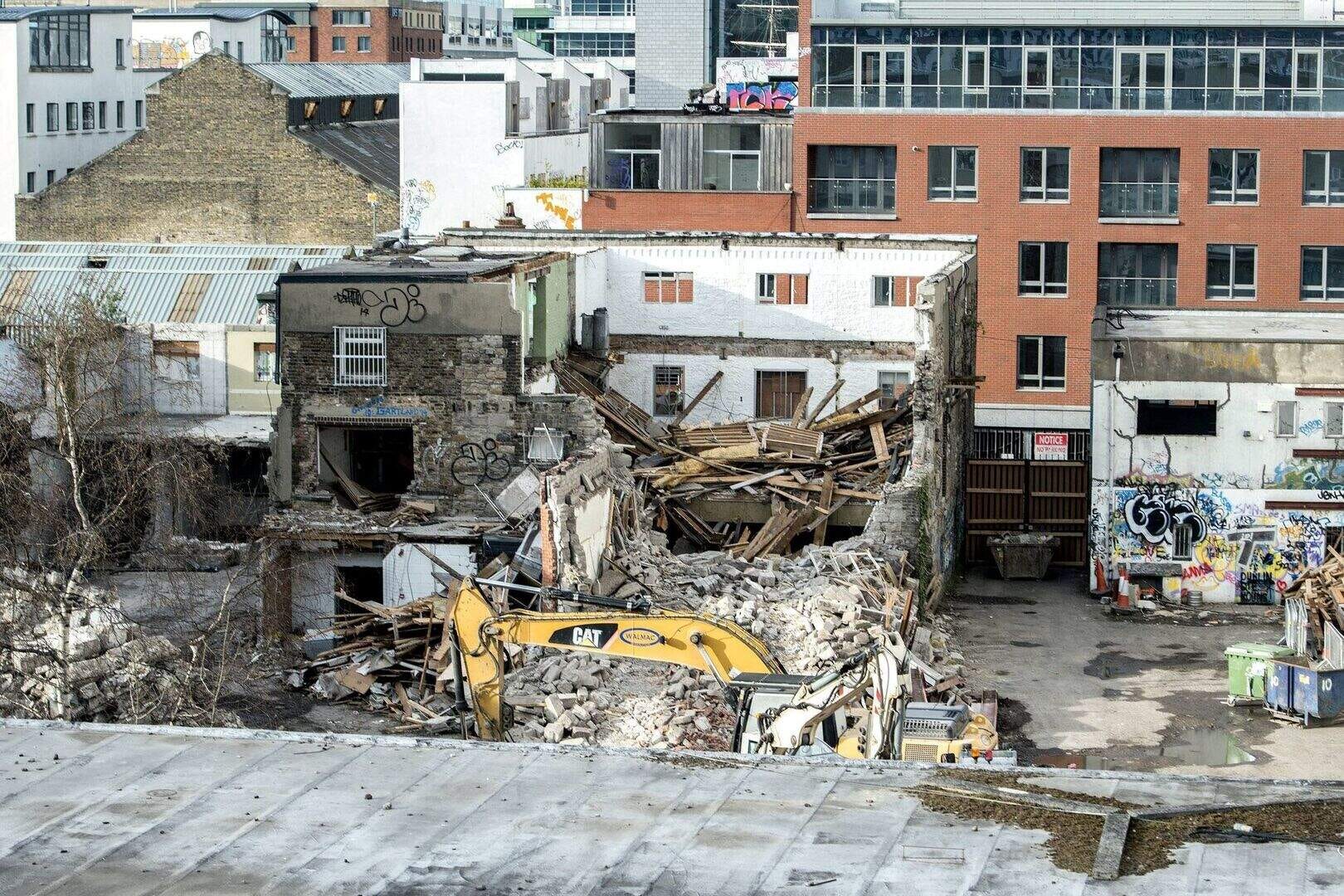
The engineer for the day was a really nice guy called Willy. What he got out of us in those twenty four hours was remarkable given the circumstances. The sounds were good, the performances were tight, and he kept things moving without ever making it feel rushed.
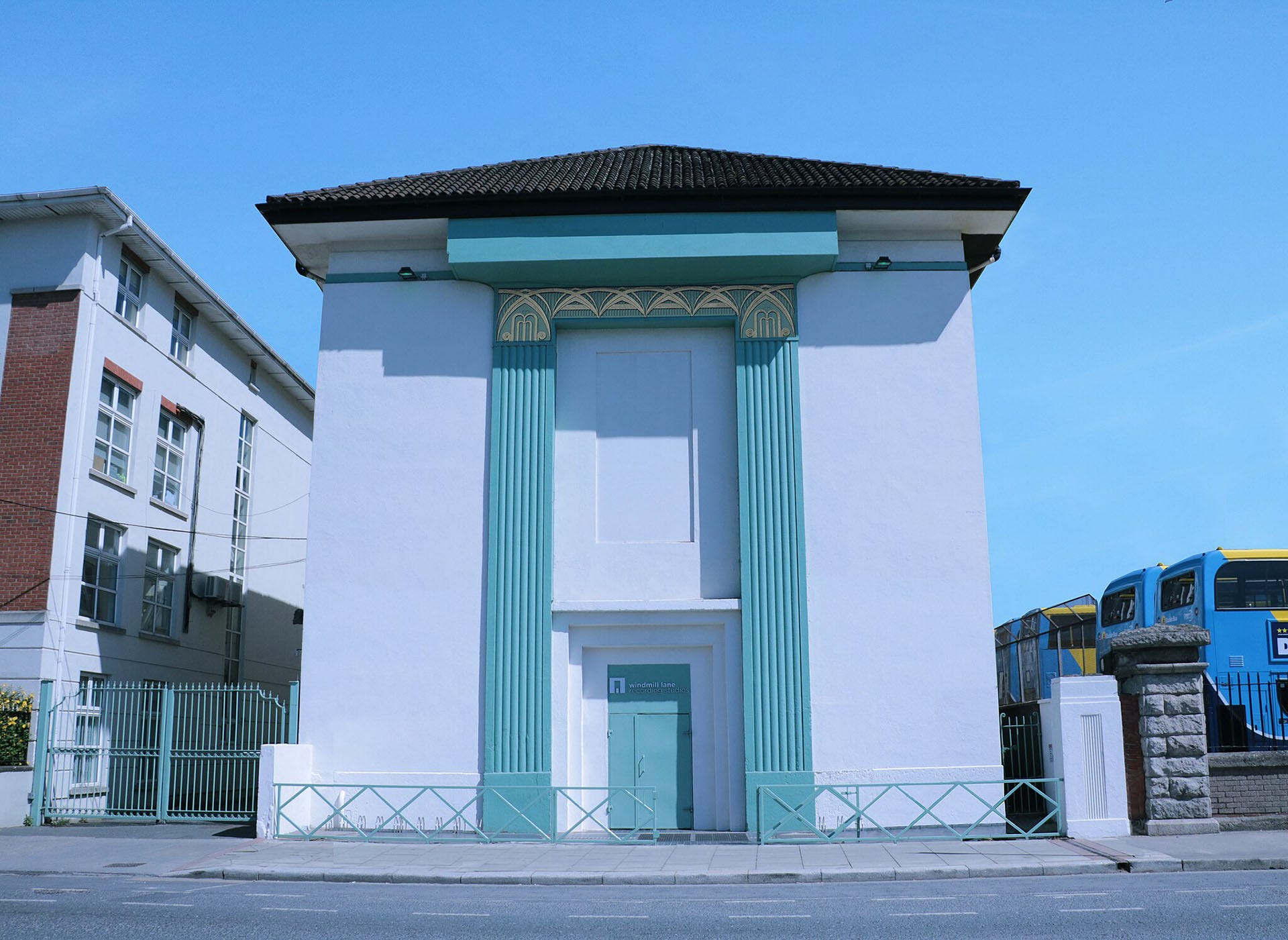
The plan was to get ‘Rain Comes Down’ and ‘Angel’ down properly, and see what else might come. During the night we worked on one of the guitar arrangements I’d been carrying around for weeks. We knocked it into shape over a few hours. It wasn’t very good and we never used it. But it came together, which was more than anything at Litton Lane had done.
By six in the morning we were done. We packed up and went to the early house. Dublin was full of them then, pubs that opened at six for the dockers and the printers.
Over pints we got talking about Tom Petty’s last album, Full Moon Fever. I liked it. I thought the production was great. Willy said it was all done on a computer.
‘Well,’ I said, ‘if that’s what a fucking computer can do, someone should buy us one’.
So off to London we trundled.
Olé, Olé, Olé.
Love the intro #WaitingForGodKnows ;-)
That time and place Jimmy…World Cup, 1990. Jesus, the feeling in the city was magic. Loved the intro to this piece by the way, a different approach. Sucks the reader right in to the room…:)